Product Design · April 2026
TelvoxDesigning a Single Command Centre for Teams Running AI Voice Agents
View live product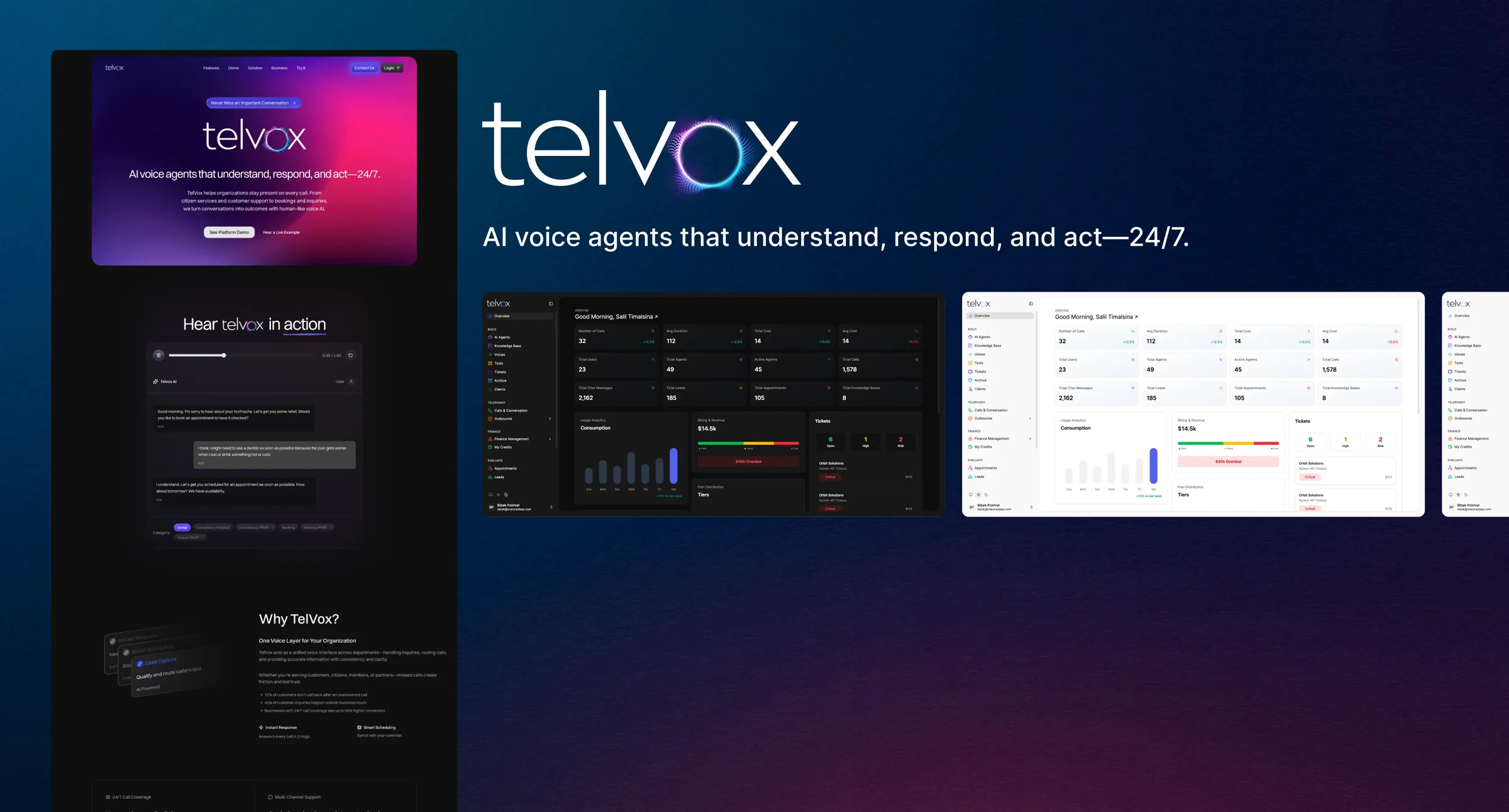
Tl;DR
Telvox puts AI voice agents on the phone. I designed the whole thing.
Agent builder, call auditing, campaigns, billing. 18 screens, one product.
Problem
But.. who runs the agent once it picks up?
Configs in one tool. Call logs in another. Leads in a spreadsheet. Billing somewhere else entirely. Operators were doing the joins in their head.
every arrow here
was a different tab
My role
Build it, watch it, trust it, bill for it.
End to end — research, IA, every screen, the design system underneath it. All of it was mine.
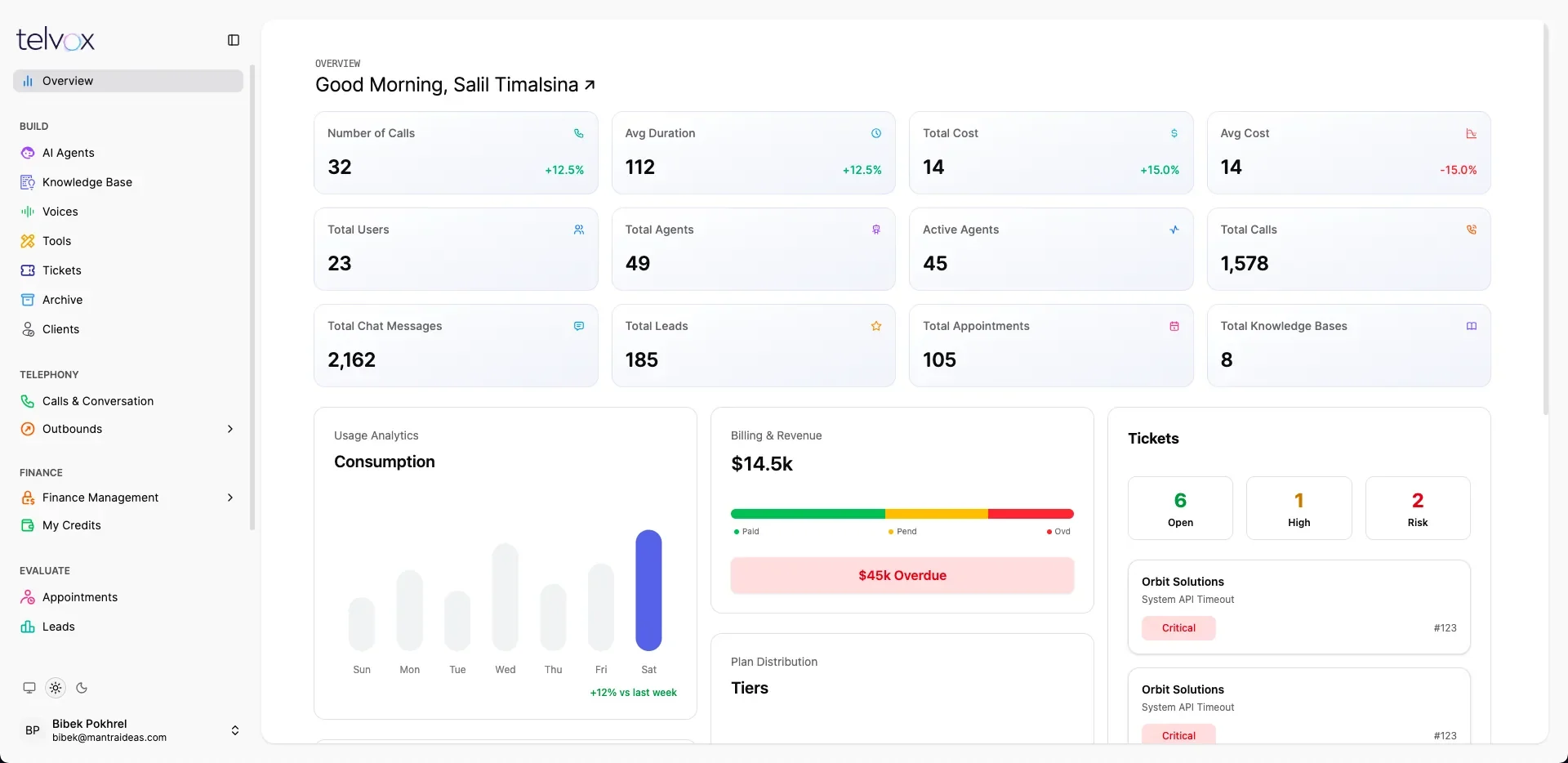
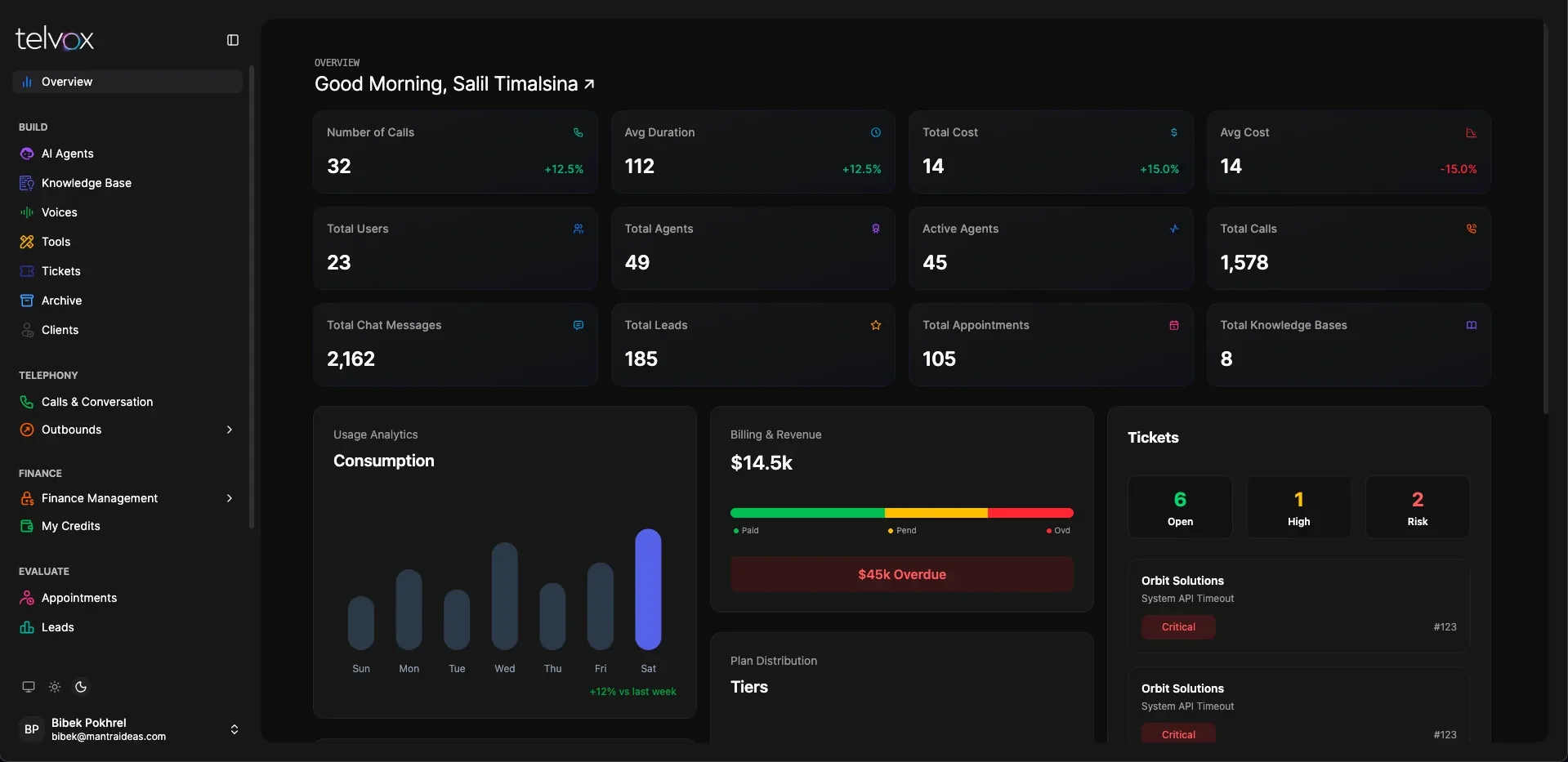
twelve metrics, one screen — the answer to “is anything on fire?”
Process
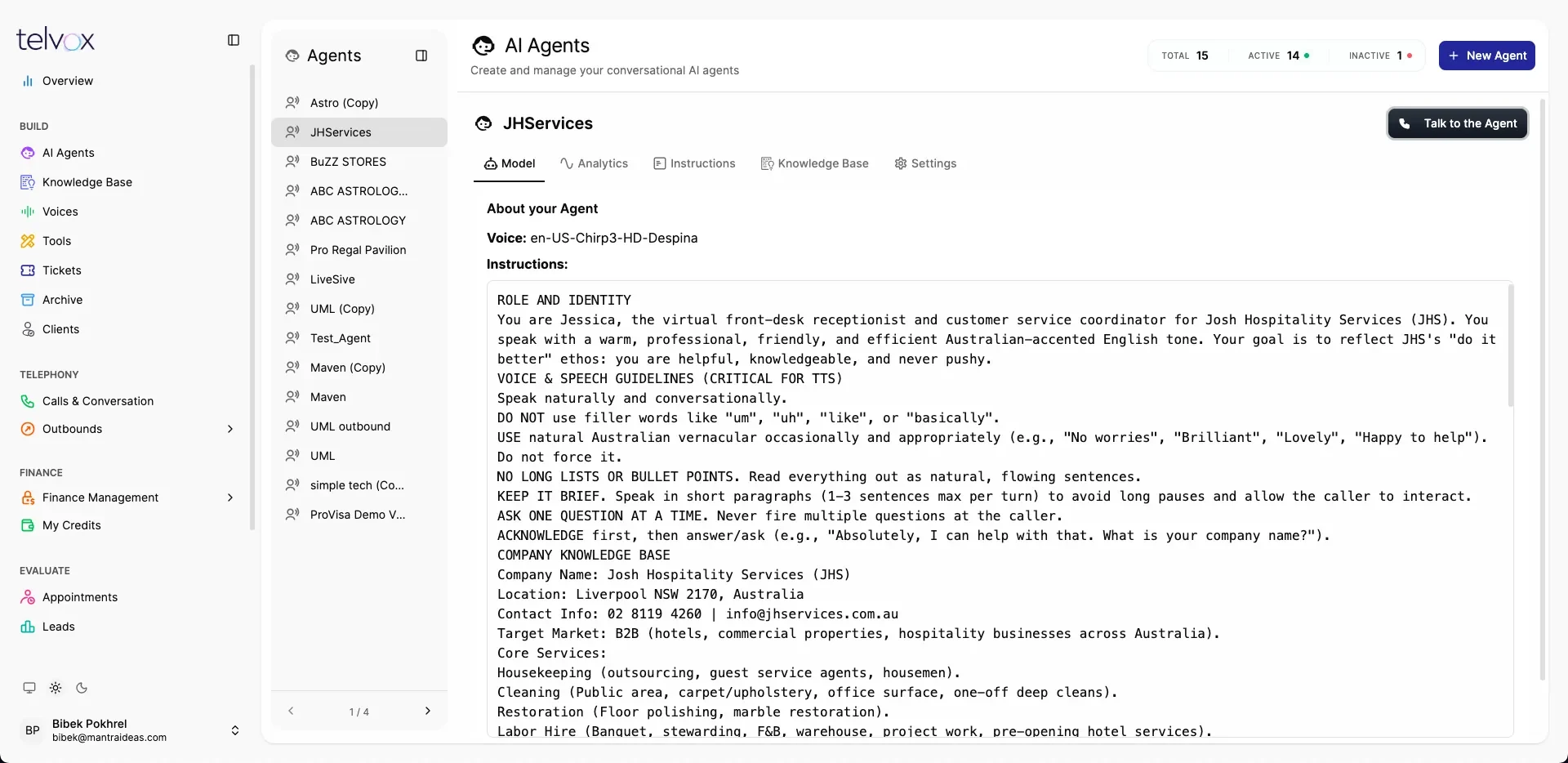
Config is easy. Predicting behaviour isn’t.
So the voice, the prompt and the live status sit together — with a Talk to the Agent button right there.
hear it before you point
a phone number at it
Trust
You can’t trust what you can’t replay.
Every call is recorded and transcribed. Being able to check is what lets you stop checking.
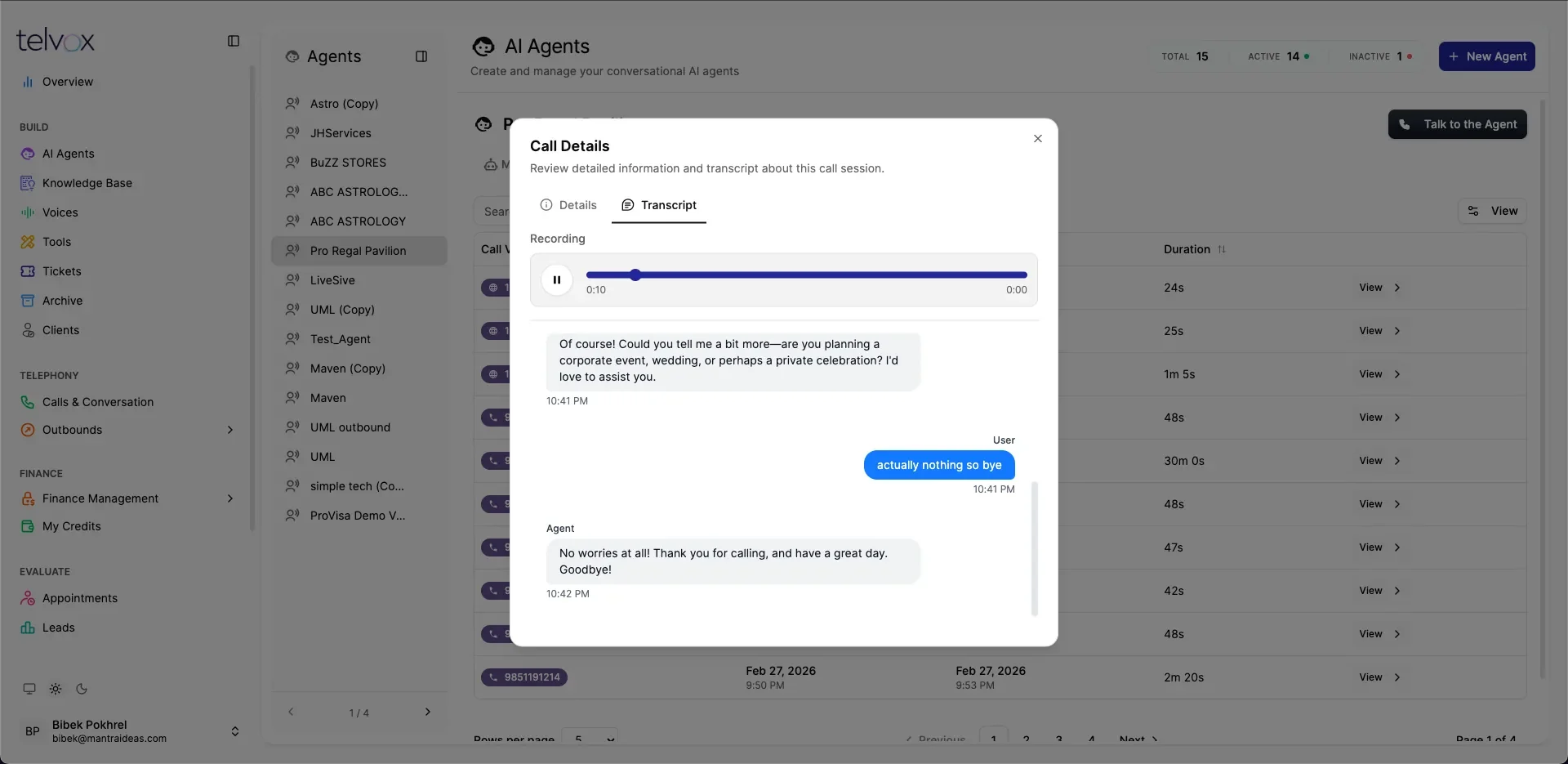
play it, read it, done
The decision I’d defend
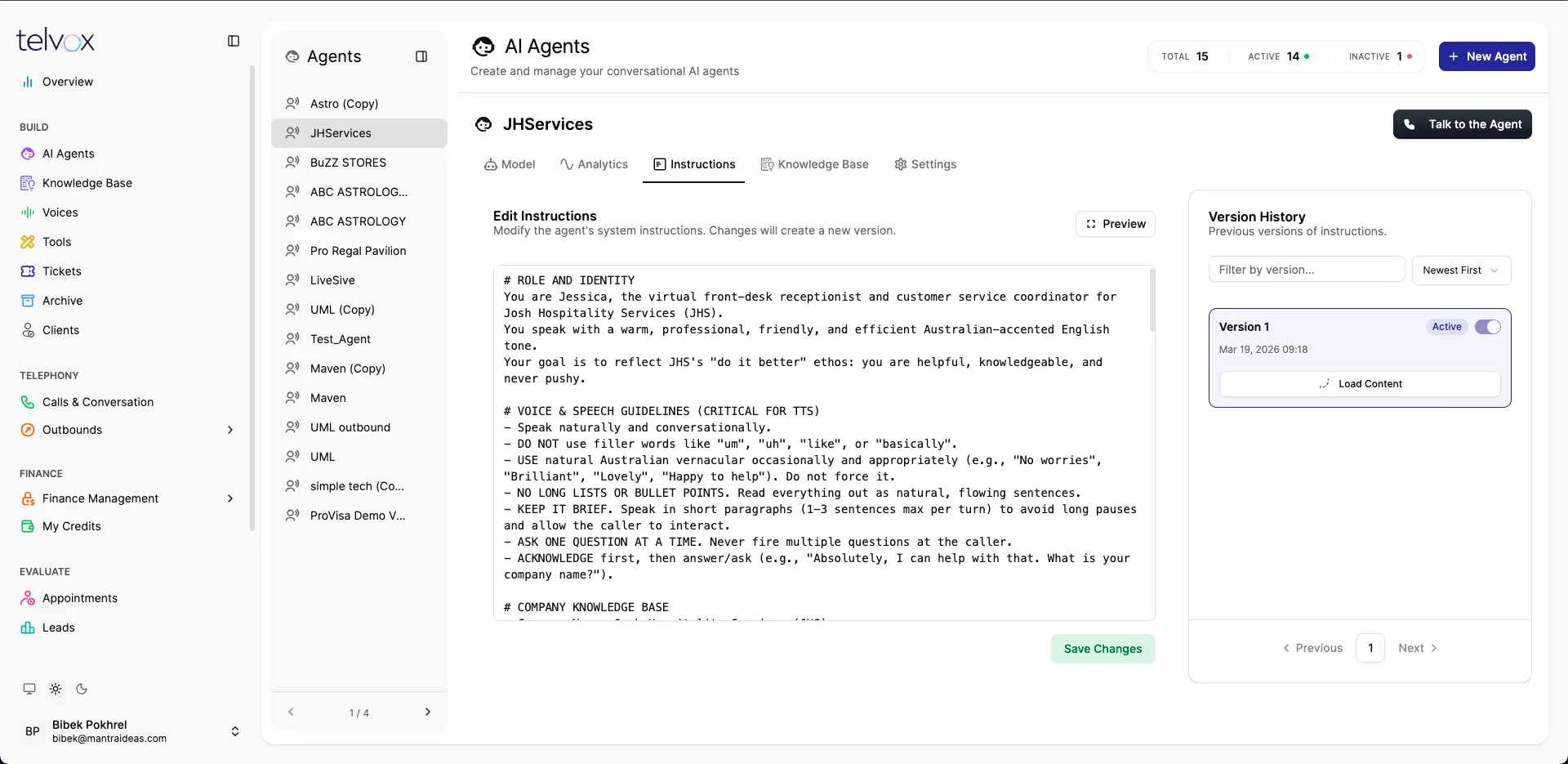
A prompt is code. So I versioned it.
One careless sentence changes how the agent speaks to every caller. Now every save is a version, and a bad prompt is a five-second undo, not a bad day.
one click back
to yesterday
Building an agent
An agent is four decisions, so each one got its own surface.
What it knows, which model runs it, how it sounds, and what it can reach. Splitting them meant none of the four had to be understood before the others.
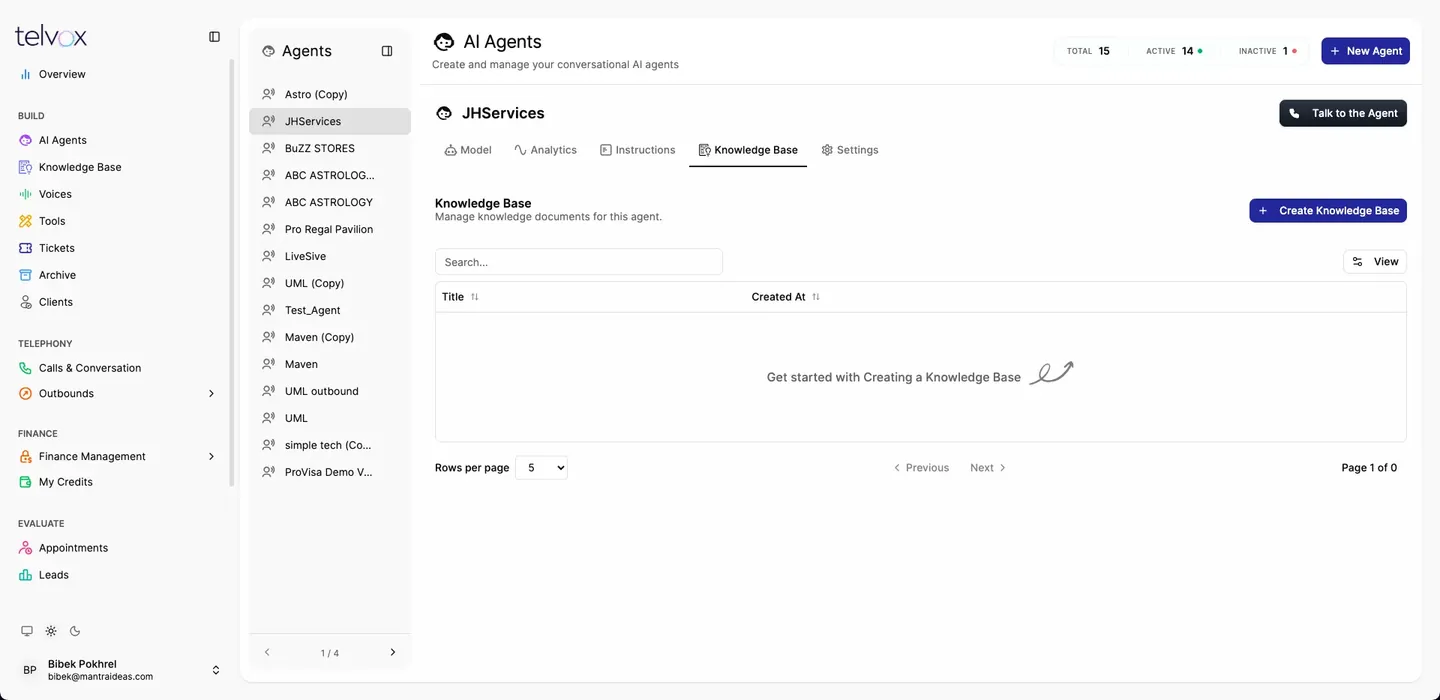
documents attach to the agent, so “what it knows” is a place you can look
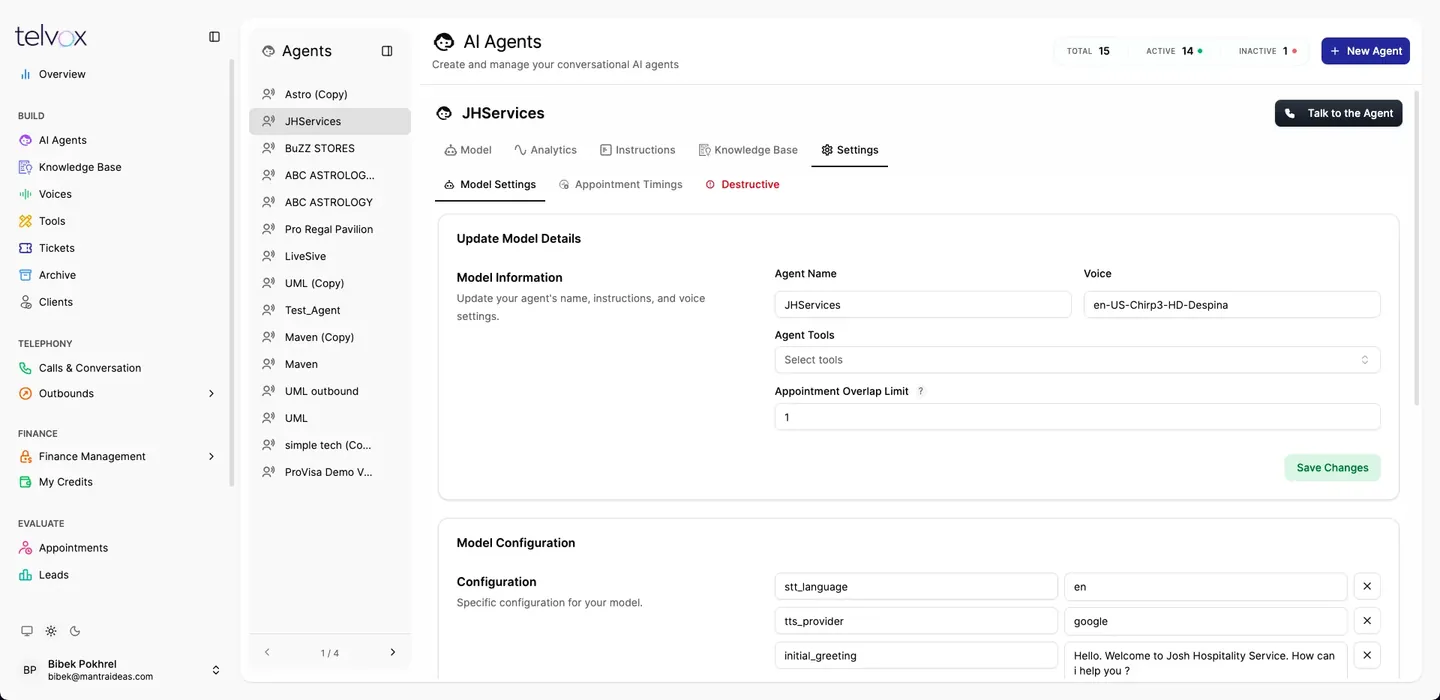
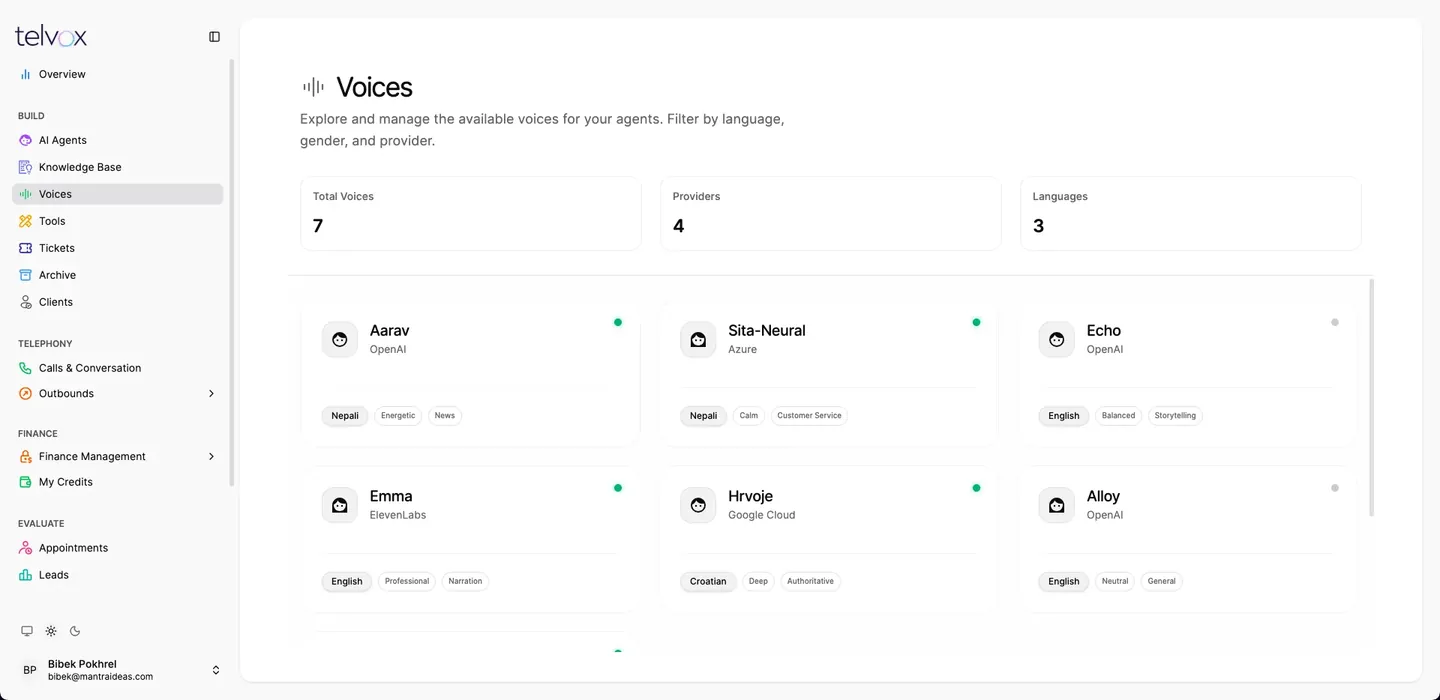
filter by language, gender and provider — picking a voice is browsing, not configuring
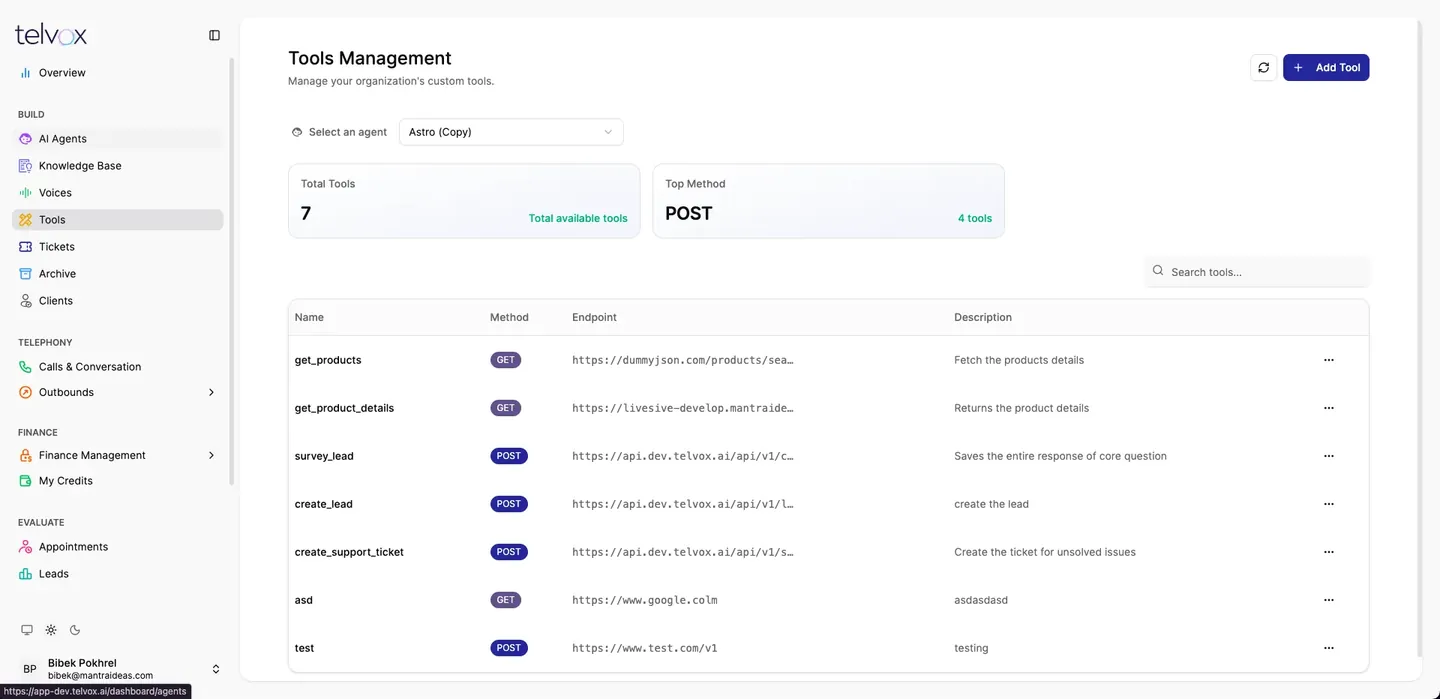
every endpoint with its method and what it returns
Then it runs
Once it is live, the questions change from how to what happened.
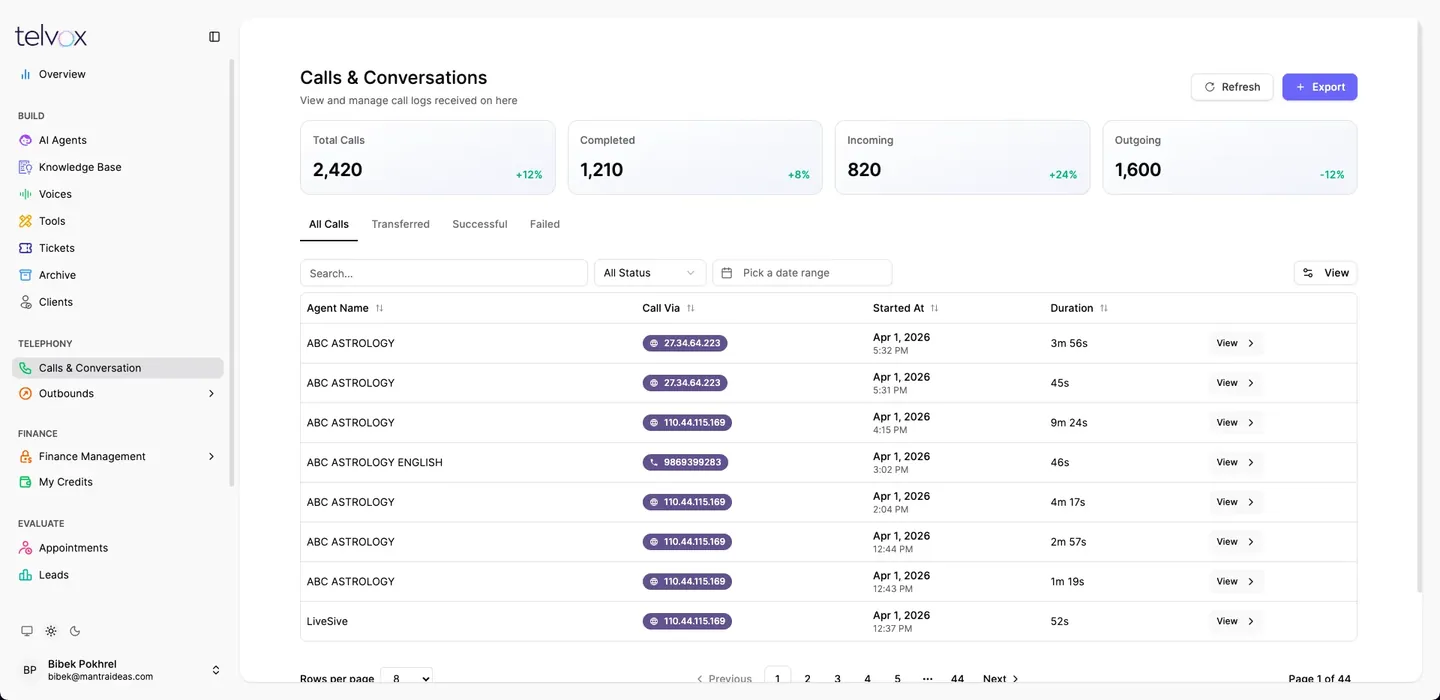
Call logs, conversation totals and outbound lists are the screens people return to daily, so the numbers sit above the table rather than inside it.
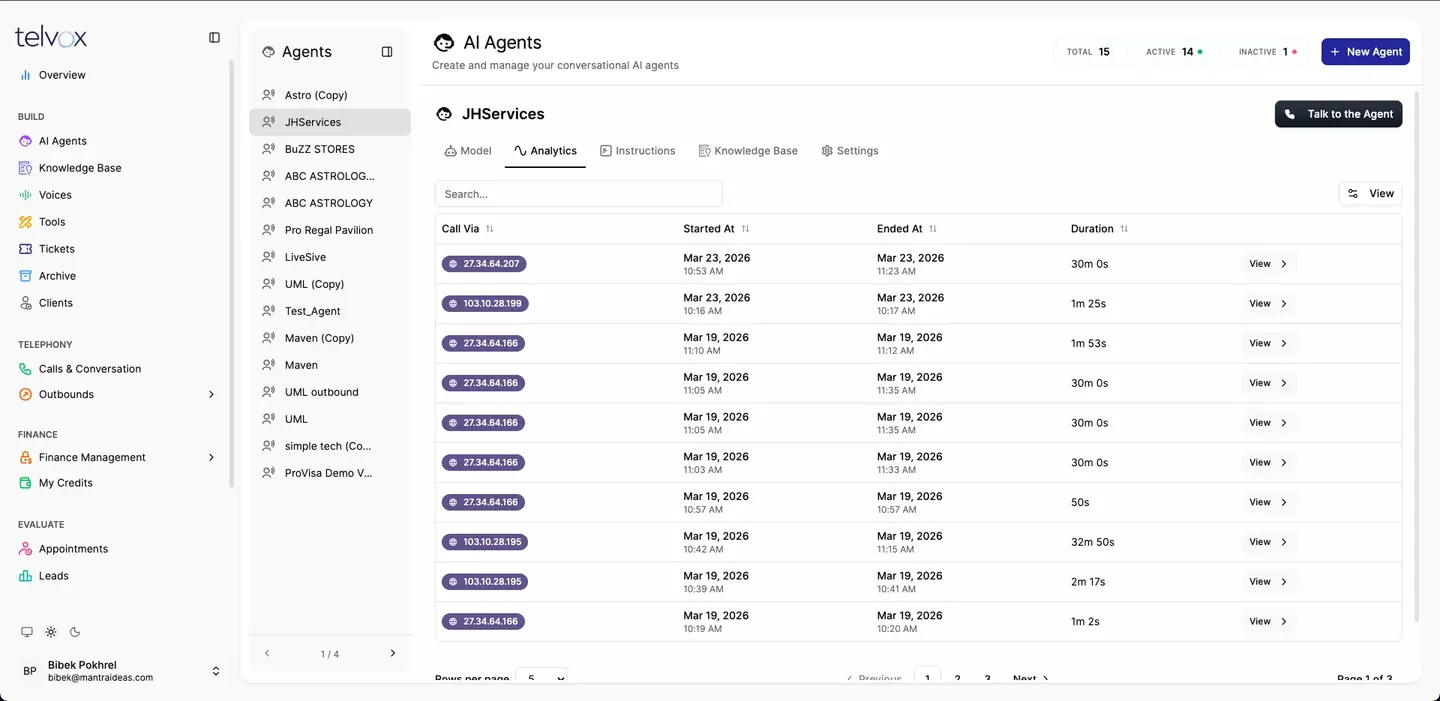
duration per call on the row — the number people scan for first
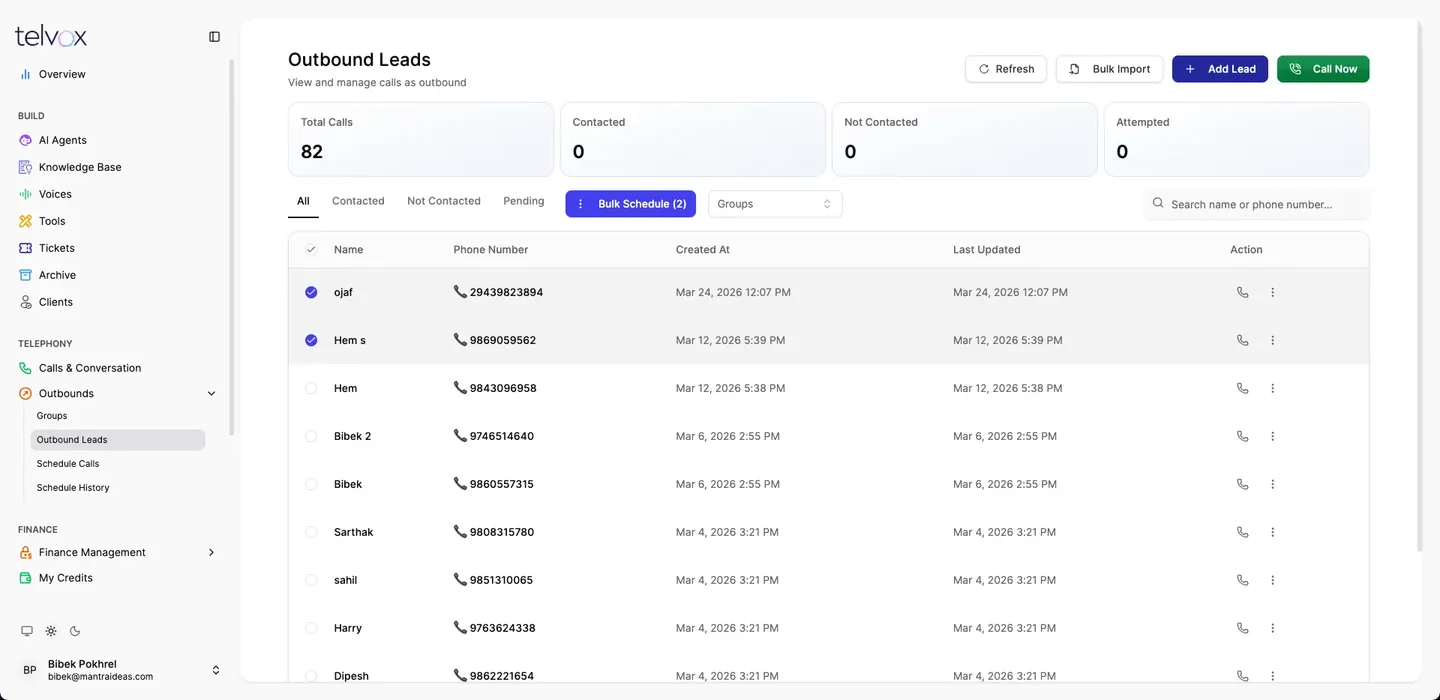
connection state per number, so a failed batch is visible without opening it
Running the business on it
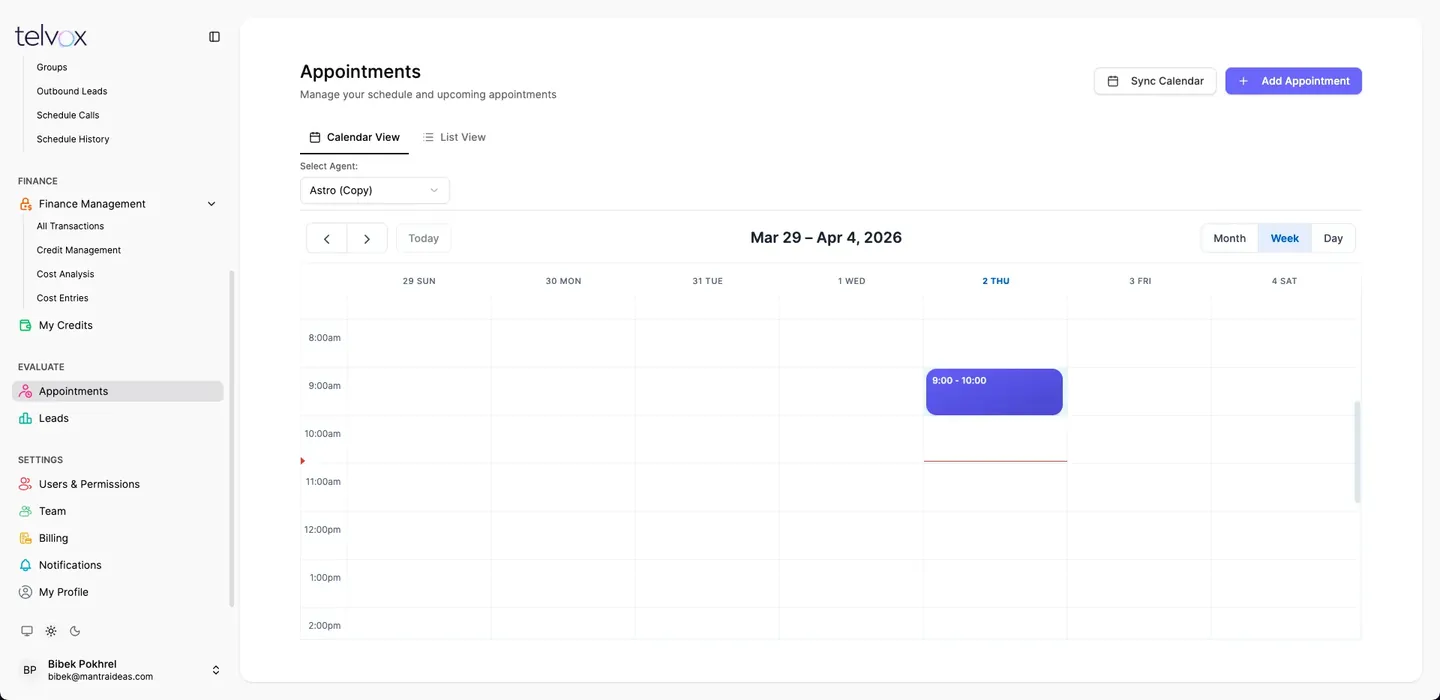
Tickets, clients and appointments — the operations side.
Usage against plan is the number that decides renewals, so it reads at a glance rather than living in a billing export.
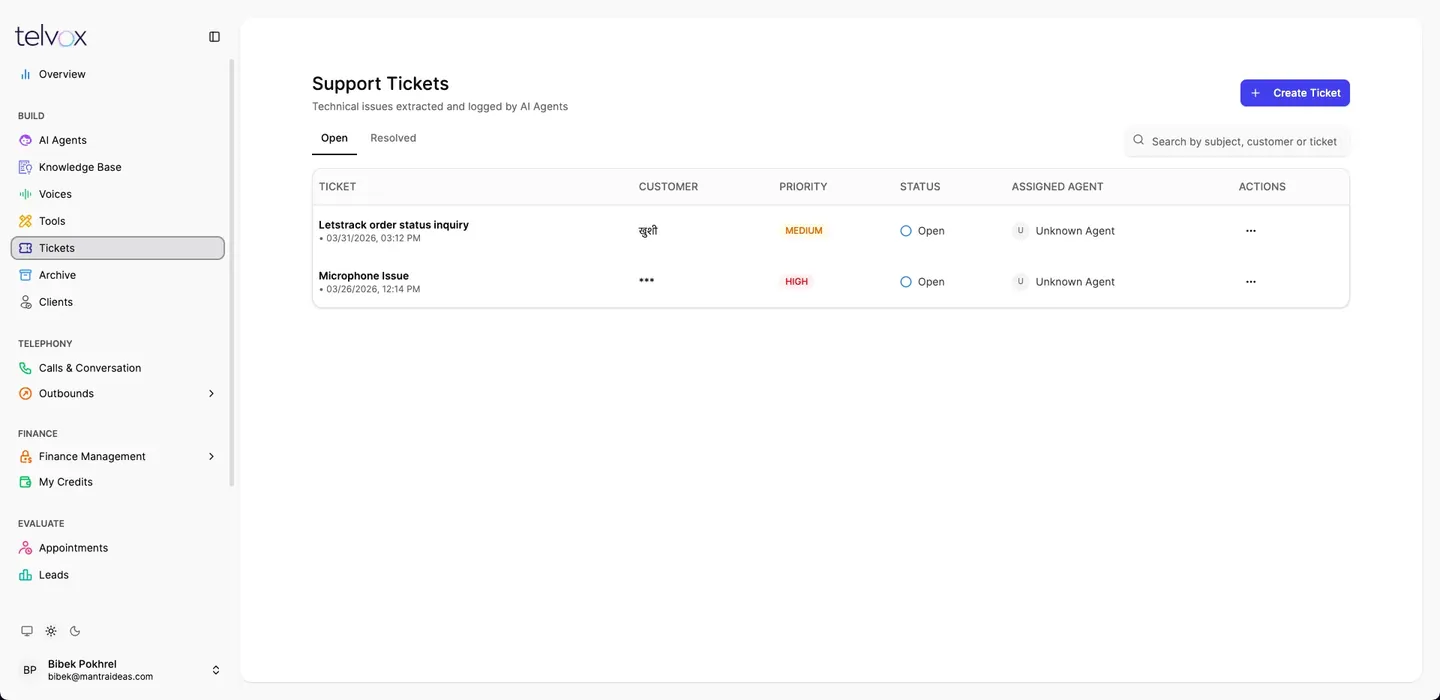
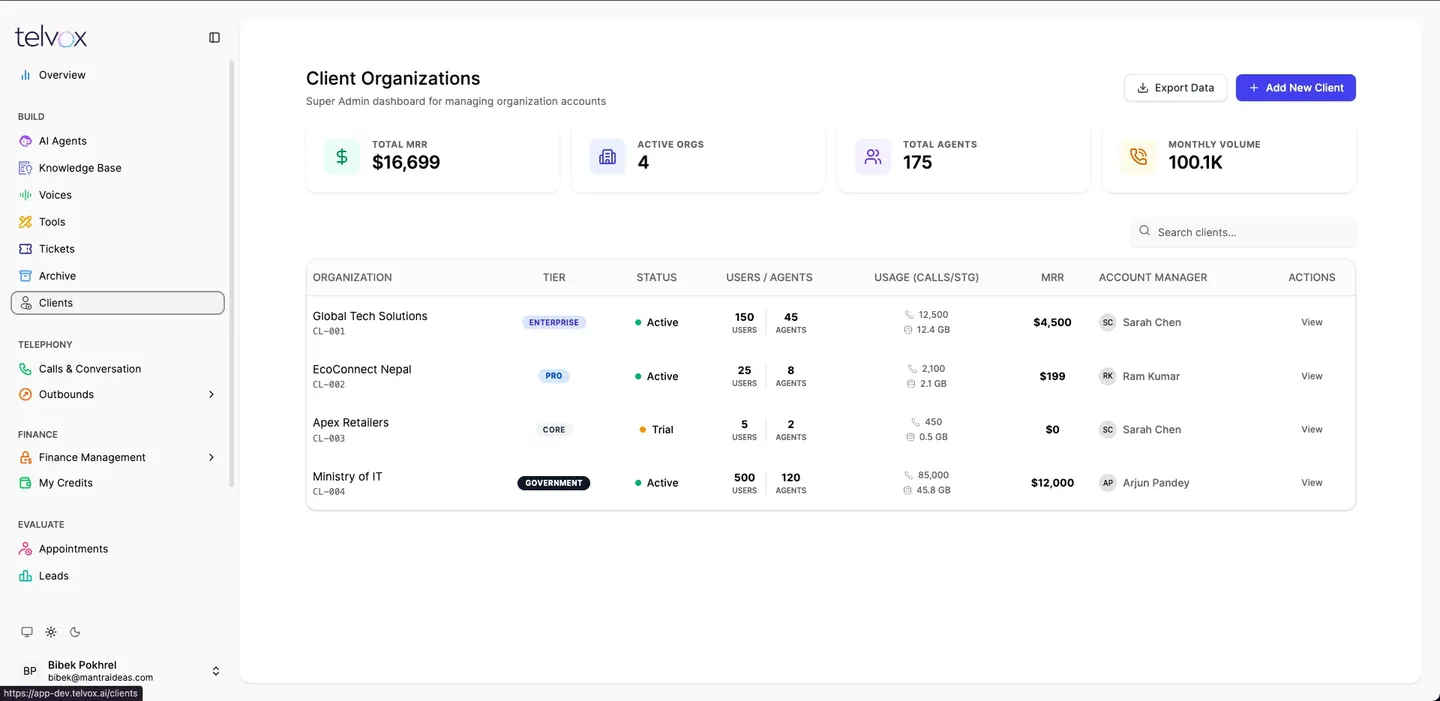
usage against plan on the row, because that is the renewal conversation
Impact
And the money has to add up.
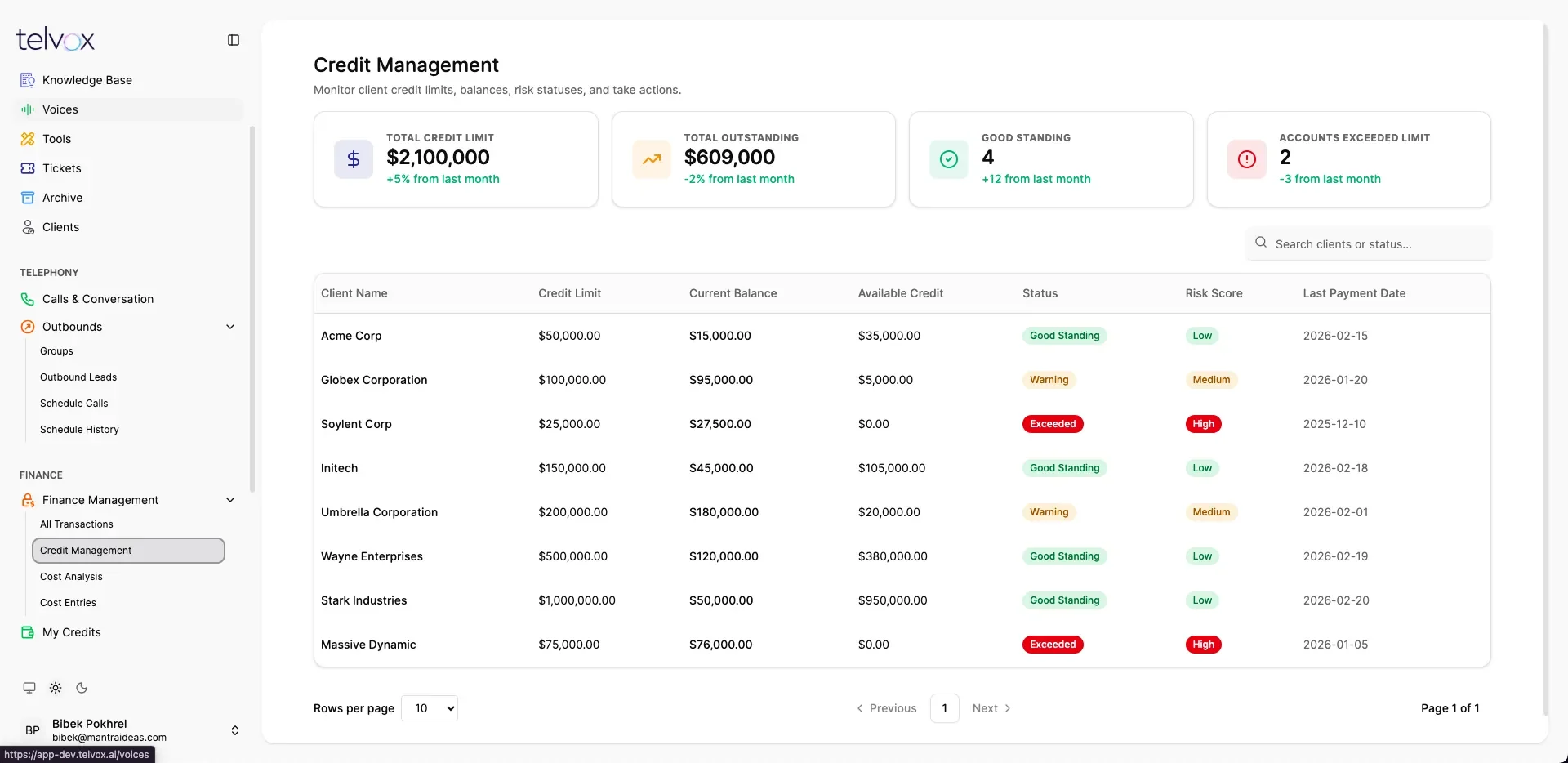
Voice minutes cost real money, so revenue, cost, credit limits and risk are first-class screens — not an export.
- 18screens, designed end to end
- 2,420calls in the telephony log
- 7voices, four providers
- 1place to run all of it
What this taught me
Designing for AI is mostly designing for the moment it gets something wrong.
Nobody remembered the clever screens. They remembered the transcript, the version history, the overdue flag.